
NDT Testing
Ground-penetrating radar, ultrasonic pulse velocity, rebound hammer, half-cell potential and impact-echo methods - selected for the question being asked and interpreted alongside the rest of the evidence.
Quick Answer
Non-destructive testing (NDT) reveals the internal condition of concrete - reinforcement position, cover, voids, likely corrosion activity and relative quality - without breaking out the structure. The skill lies in choosing the right method for the question and reading the results in context.
No single test gives a complete answer. We select methods to suit the element, its age and its exposure, then interpret the readings alongside visual observations, drawings and any laboratory results.
Who This Is For
- - Building owners & facility teams
- - Consultants & contractors
- - Developers
- - Asset managers
When It Is Needed
- - Alongside an inspection
- - Suspected corrosion or voids
- - Before strengthening design
- - Quality verification
What Problems This Service Solves
Visual inspection can only report what is visible. NDT helps answer questions about what lies beneath the surface before decisions are made.
Hidden Reinforcement
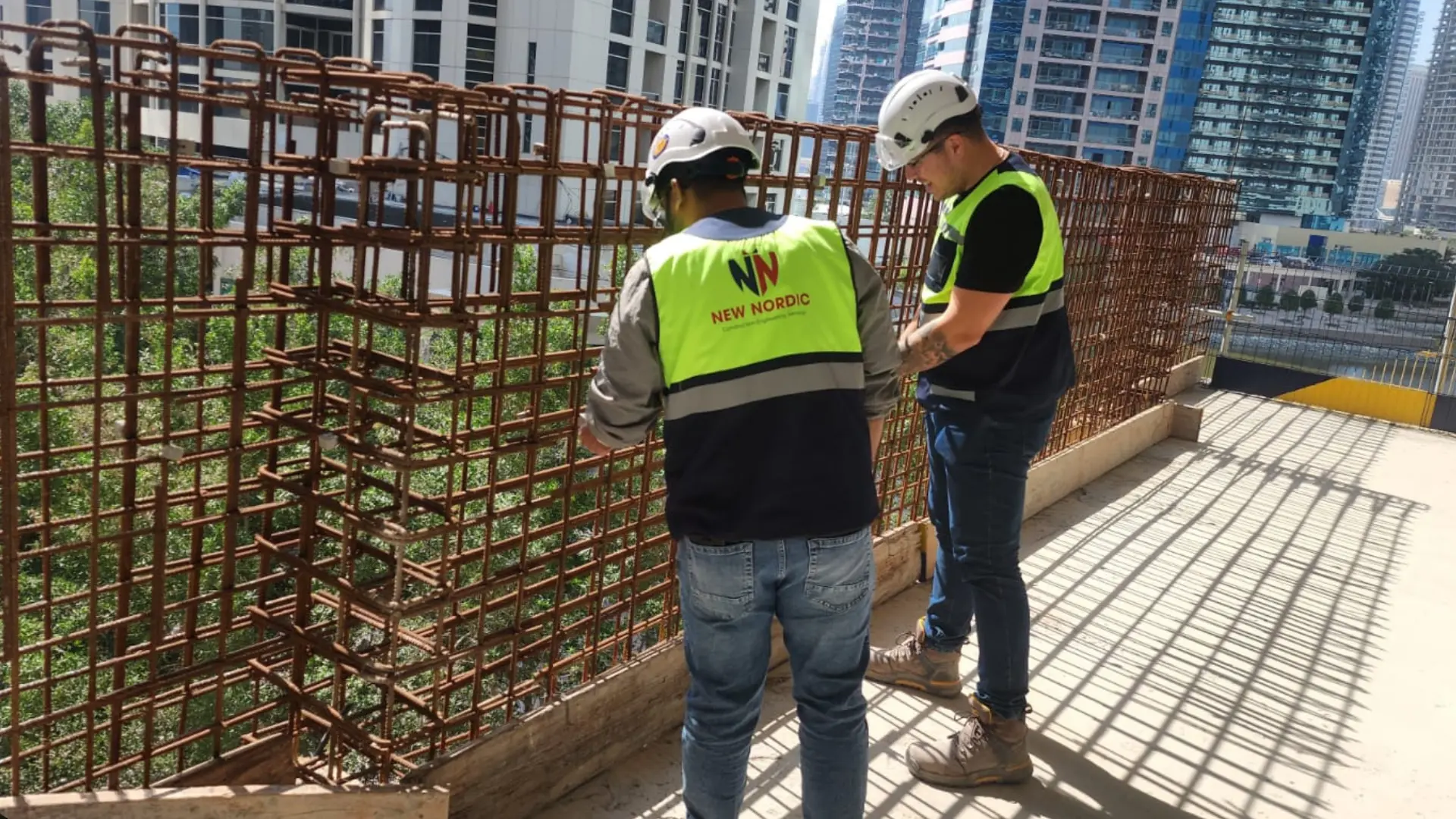
Bar position, spacing and cover are concealed within the concrete. Radar and cover-meter surveys can locate them without opening up.
Possible Corrosion Activity
Reinforcement may corrode long before cracks or staining appear. Potential mapping can indicate where further investigation is worthwhile.
Voids & Poor Compaction
Hollow areas and honeycombing are not visible from outside. Ultrasonic and impact-echo methods can highlight areas that merit a closer look.
Uncertain Concrete Quality
Rebound and pulse-velocity readings give a comparative view of concrete across an element, helping target any coring that is needed.
Missing Records
Where as-built drawings are absent or unreliable, testing can help establish what is actually in the structure.
Limited Access or Occupied Buildings
Non-destructive methods are low-disruption and suit buildings that remain in use, within the limits of each technique.
The Testing Process
Define the Question
Agree what needs to be established and where
Method Selection
Choose suitable techniques for the elements concerned
Site Testing
Carry out and record tests at agreed locations
Interpretation
Read results alongside observations and records
Report
Findings, limitations and suggested next steps
Methods & Techniques
Each method answers a different question and has its own limitations. Techniques are chosen for the assignment and their results are read together, not in isolation.
GPR - Ground Penetrating Radar
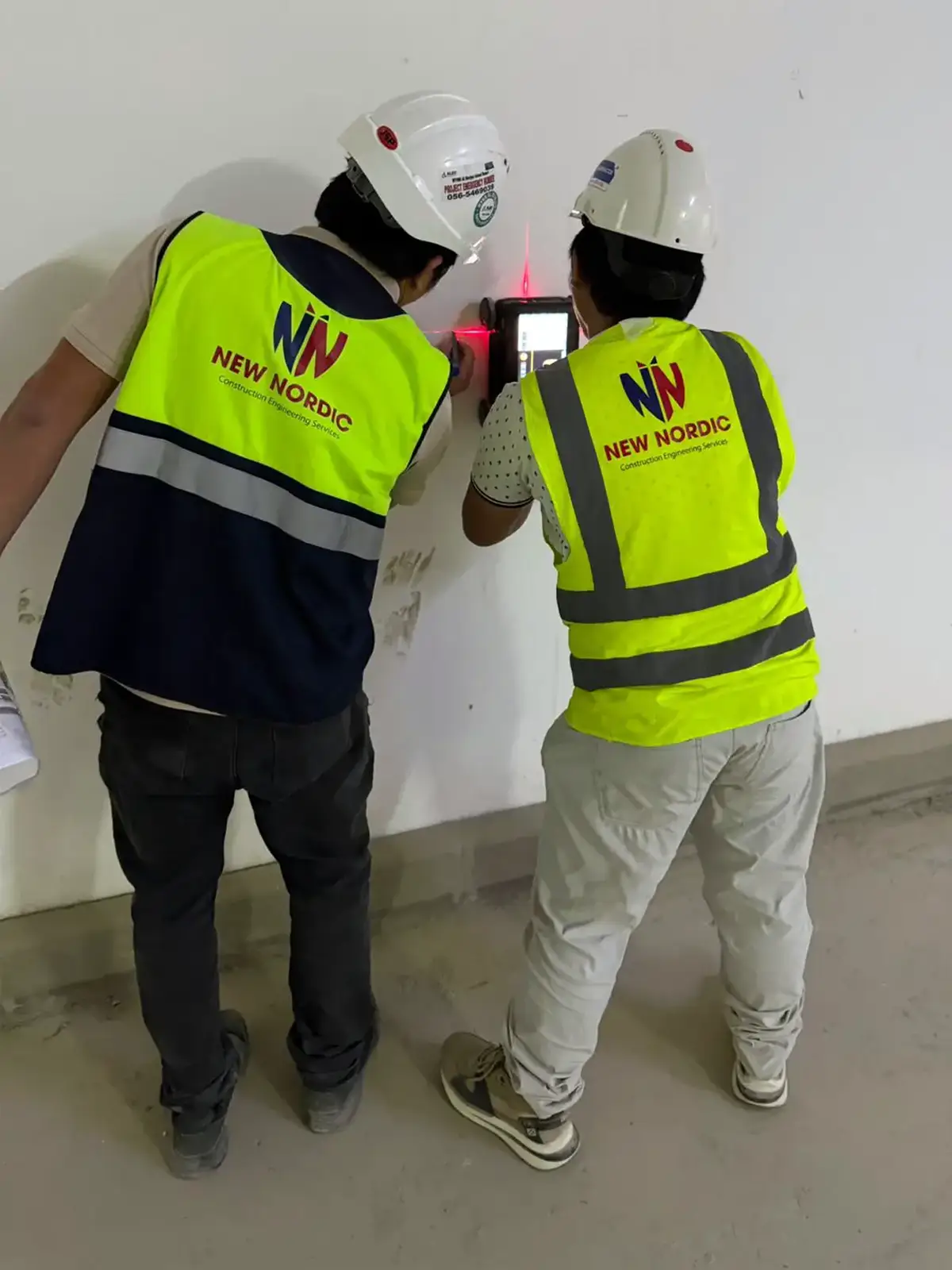
Indicates reinforcement position and embedded items without breaking concrete.
Half-Cell Potential
Maps the likelihood of active reinforcement corrosion across slabs and columns.
Rebound Hammer
Rapid surface-hardness screening to compare concrete across large areas.
UPV - Ultrasonic Pulse Velocity
Helps identify internal cracking, voids and variations in concrete quality.
Cover Meter
Measures concrete cover to reinforcement for comparison with the design information.
Impact-Echo
Detects delaminations and internal defects in slabs and walls from reflected stress waves.
What You Receive
Deliverables are agreed for each assignment and shaped around the project's stage, available information and the question to be resolved. Findings are recorded with their basis and limitations, so decisions can follow the evidence.
Test Report
Methods used, locations tested, results and stated limitations
Interpreted Findings
Results read together with inspection observations and records
Test Location Mapping
Marked-up drawings or photographs showing every test point
Result Summaries
Clear tables and plots for each method and element
Recommendations for Further Work
Whether coring, laboratory testing or monitoring would add value
Input to Assessment or Design
Data formatted for use in assessment, strengthening or repair design
Why New Nordic
Defined Scope
Each assignment starts with a clear question, an agreed scope and a stated reporting format.
Site-Specific Approach
Location, building use and available records shape the work, not assumptions from another market.
Evidence-Led Findings
Observations are recorded with their location and context, with limitations stated plainly.
One Connected Team
Planning, design, supervision and review can be discussed together, with responsibilities agreed from the outset.
Related Services
Material Testing
Concrete coring and laboratory analysis of strength, chloride content, carbonation depth and cover, chosen to suit the question.
Structural Inspections
Visual and technical inspection of building structure, recording defects and reporting what they may mean for the building.
Durability Engineering
Assessment of corrosion risk and long-term performance based on actual exposure, construction information and maintenance records.
Frequently Asked
What is non-destructive testing?
NDT evaluates the internal condition of concrete - reinforcement, cover, voids and likely corrosion activity - without breaking out the structure. Results indicate where to look; they are interpreted with other evidence.
How do you decide which tests to use?
The choice follows the engineering question, the element and its history. We agree the methods and locations with you before testing starts, rather than applying a fixed package to every building.
Can NDT replace concrete coring?
Not entirely. NDT covers large areas efficiently and helps target where limited cores and laboratory tests will be most informative.
Is NDT suitable for occupied buildings?
Often, yes. The methods are non-destructive and low-disruption, although access, noise and surface preparation are discussed during planning.
Can I request NDT as a standalone service?
Yes. NDT can be requested on its own or as part of a wider inspection, assessment or design assignment. The scope is agreed around your question.
Start a Conversation
Talk to Us About NDT Testing
Tell us where the project is, what stage it has reached and the questions you need to resolve. We will discuss the scope of support required.