
Durability Engineering
Assessment of corrosion risk, material degradation and long-term performance, based on the actual exposure, construction information and maintenance history of the structure.
Quick Answer
Durability engineering examines how a structure is likely to perform over time. It considers the exposure the building actually experiences, how it was built, what deterioration is already present and how it has been maintained.
The outcome is a clearer understanding of where deterioration risk is concentrated and a maintenance or protection strategy that follows from the evidence, not from general assumptions.
Who This Is For
- - Building owners & facility teams
- - Asset managers
- - Developers
- - Infrastructure operators
When It Is Needed
- - Early signs of deterioration
- - Planning maintenance
- - Before a repair strategy is chosen
- - Reviewing protective systems
What Problems This Service Solves
Durability depends on exposure, materials, workmanship and upkeep together. Understanding that combination for your building is the first step in managing it.
Reinforcement Corrosion
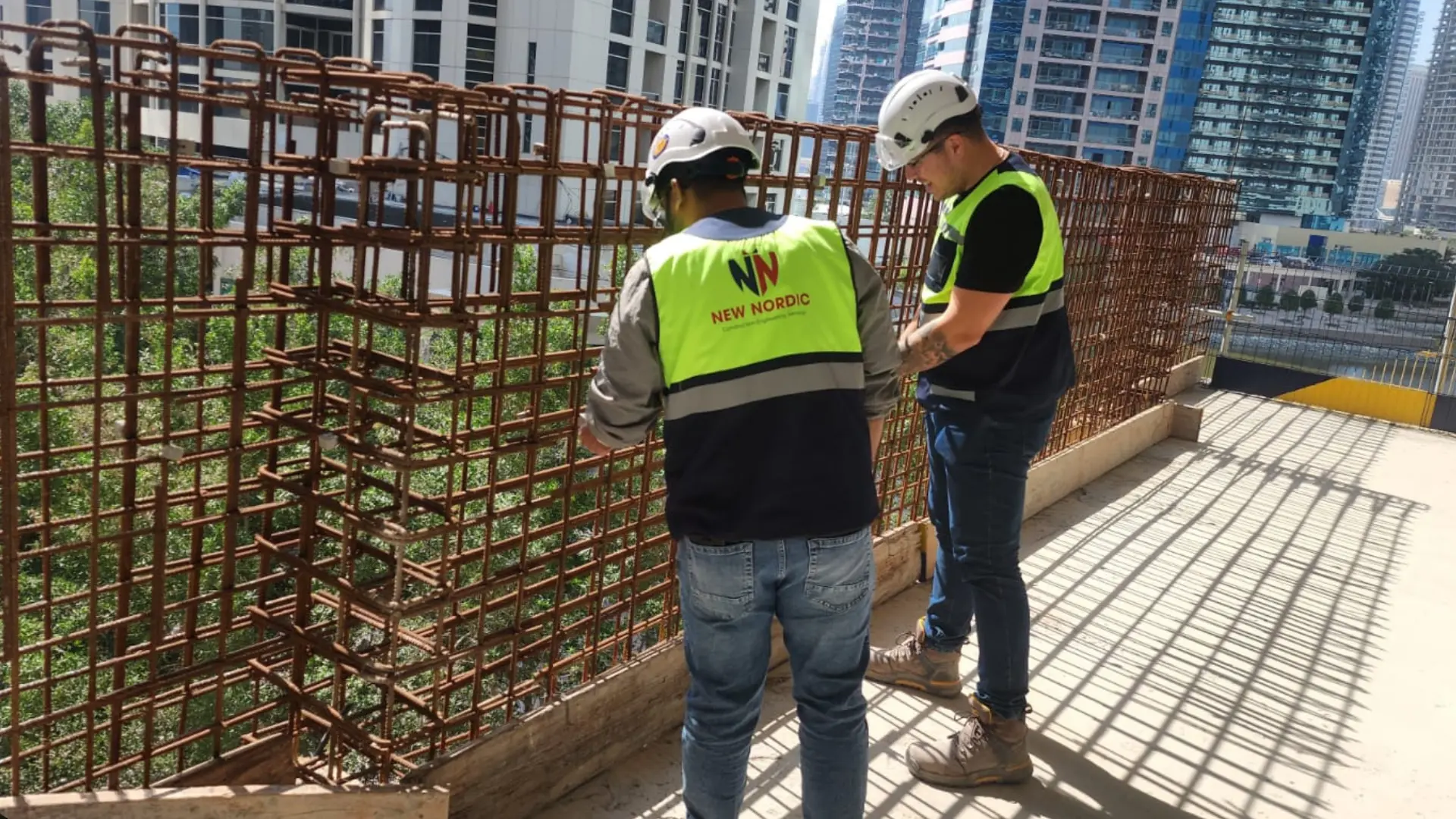
Corrosion is among the most common causes of deterioration in reinforced concrete. Investigation helps establish where, how far and why.
Exposure Varies by Building
Proximity to the coast, moisture, pollution and temperature range all differ between sites. Assessment starts from the conditions your building actually experiences.
Incomplete Construction Records
Cover, concrete specification and protective measures affect durability. Where records are missing, investigation helps fill the gap.
Ineffective Past Repairs
Repairs that did not address the cause can accelerate deterioration nearby. Reviewing earlier work informs the next decision.
Unplanned Maintenance
Reactive repair is usually costlier than planned intervention. A durability review helps prioritise attention.
Protection Choices
Coatings, inhibitors and other protective measures suit some conditions better than others. Selection should follow the diagnosis.
The Durability Process
Review Records
Gather drawings, specifications and maintenance history
Exposure Appraisal
Consider the conditions the structure is subject to
Investigation
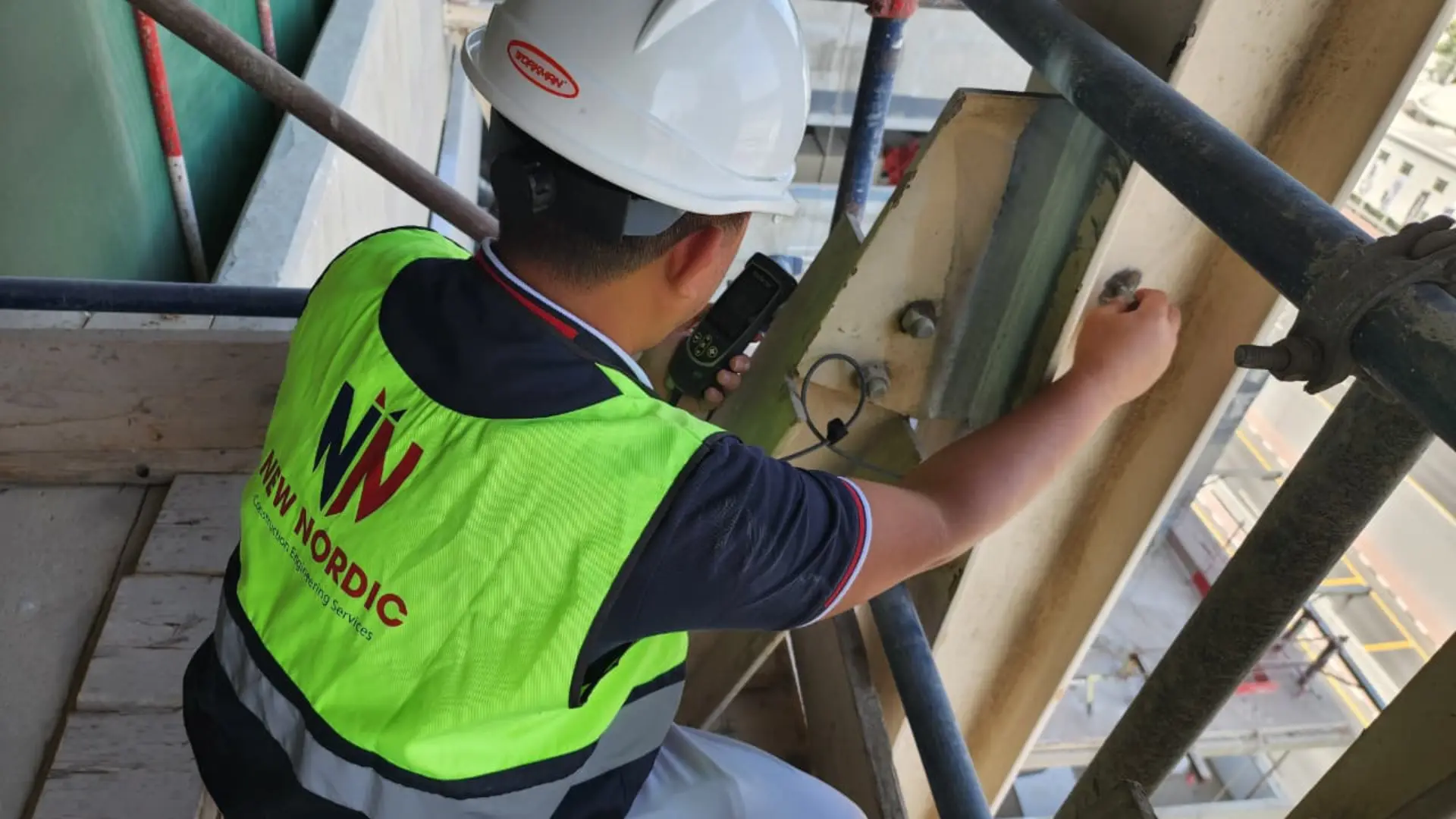
Inspection, testing and sampling as the question requires
Evaluation
Identify mechanisms, affected areas and risk
Strategy
Recommendations for maintenance or protection
Methods & Techniques
Investigation methods are chosen to suit the structure and the suspected mechanisms, and are interpreted together.
Condition Survey
Records visible deterioration and its distribution.
Half-Cell & Resistivity
Indicates where reinforcement corrosion is more or less likely.
Chloride Profiling
Shows how far chlorides have penetrated relative to the reinforcement.
Carbonation Testing
Compares carbonation depth with measured cover.
Cover Survey
Confirms cover to reinforcement across representative areas.
Maintenance Record Review
Considers earlier repairs and protective treatments.
What You Receive
Deliverables are agreed for each assignment and shaped around the project's stage, available information and the question to be resolved. Findings are recorded with their basis and limitations, so decisions can follow the evidence.
Durability Assessment Report
Findings, mechanisms identified and stated limitations
Risk Areas
Where deterioration risk is concentrated, shown on drawings
Exposure Summary
The conditions considered and how they influence the findings
Test Results
Investigation data presented with locations and methods
Maintenance Strategy
Prioritised options for repair, protection or monitoring
Input to Repair Design
Information suitable for specifying remedial works
Why New Nordic
Defined Scope
Each assignment starts with a clear question, an agreed scope and a stated reporting format.
Site-Specific Approach
Location, building use and available records shape the work, not assumptions from another market.
Evidence-Led Findings
Observations are recorded with their location and context, with limitations stated plainly.
One Connected Team
Planning, design, supervision and review can be discussed together, with responsibilities agreed from the outset.
Related Services
Material Testing
Concrete coring and laboratory analysis of strength, chloride content, carbonation depth and cover, chosen to suit the question.
Structural Service Life
Evidence-based assessment of long-term performance to support maintenance planning and investment decisions, without guaranteed lifespans.
Building Envelope Leakage
Investigation of water ingress through facades, roofs and junctions, informed by seasonal leakage records and earlier repairs.
Frequently Asked
What does a durability assessment cover?
It reviews the building's exposure, construction information and maintenance history, then uses inspection and testing to understand the deterioration present and the risk that remains.
Is durability only a concern near the coast?
No. Coastal exposure matters where it applies, but moisture, pollution, temperature cycles and construction quality all affect durability. We assess the conditions at your site.
Can you tell me how long my building will last?
We do not offer guaranteed lifespans. We describe the condition, the likely mechanisms of deterioration and the maintenance that would help manage them.
Do I need testing?
Often, but not always. Where good records and clear observations exist, a focused review may be enough. We recommend testing when it would change a decision.
How does this relate to repair design?
A durability assessment identifies causes and priorities. It can feed directly into strengthening or repair design and the choice of protective measures.
Start a Conversation
Talk to Us About Durability Engineering
Tell us where the project is, what stage it has reached and the questions you need to resolve. We will discuss the scope of support required.